

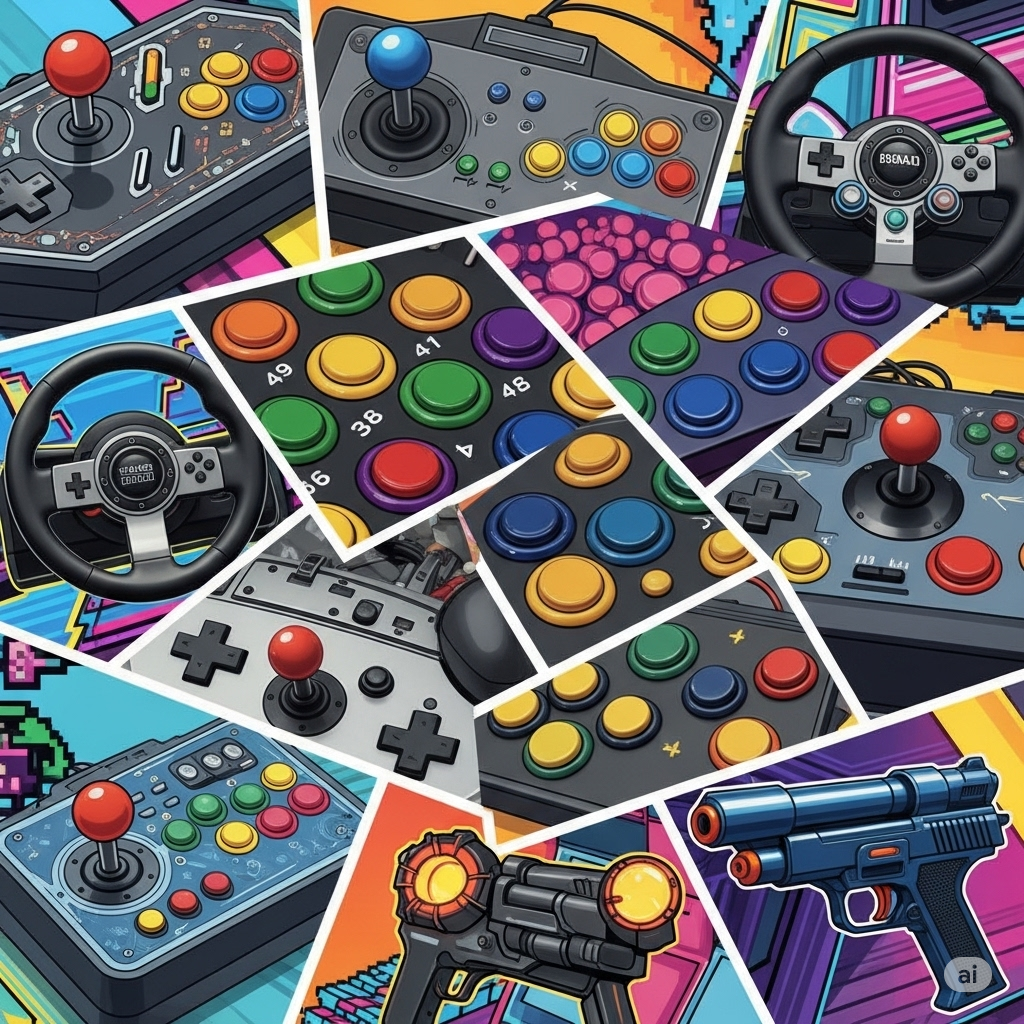
From Button Mashers to Motion Sensors: The Evolution of Arcade Controls
Blog Title: From Button Mashers to Motion Sensors: The Evolution of Arcade Controls
From the satisfying click of a joystick to the immersive feel of a VR controller, arcade controls have come a long way. For decades, these input devices have shaped how we play, connect, and compete. Whether you remember pounding buttons on a Street Fighter cabinet or dancing your heart out on Dance Dance Revolution, arcade controls are as much a part of the experience as the games themselves. In this blog, we explore how arcade control technology evolved from simple mechanics to dynamic, sensor-based systems that engage your whole body.
🎮 The Golden Era: Joysticks and Buttons
Back in the late 70s to 90s, most arcade machines were defined by simple control schemes. Joysticks, often paired with one to six buttons, dominated cabinets for games like Pac-Man, Donkey Kong, and Street Fighter. These controls were intuitive, durable, and accessible to players of all skill levels.
-
Key Features:
-
Mechanical microswitches
-
Responsive button presses
-
Easy-to-replace parts
-
This era emphasized skill-based gameplay. Combos, timing, and reaction speed ruled the arcade floor.
🏎️ Racing Ahead: Steering Wheels and Pedals
As racing games like Out Run and Daytona USA surged in popularity, arcade controls had to evolve. Developers introduced steering wheels, gas pedals, and even gear shifters to bring players closer to a realistic driving experience.
-
Enhancements:
-
Force feedback systems
-
Analog sensitivity
-
Seat motion sync in advanced cabinets
-
These innovations added a physical thrill to the gameplay that home consoles couldn’t match at the time.
🌈 Sensory Interaction: Light Guns and Dance Pads
Light gun games like Time Crisis and House of the Dead invited players to point and shoot at the screen. This was one of the earliest steps toward body-based interaction.
Then came Dance Dance Revolution, where players used foot pads to match rhythmic cues. These games transformed arcades into arenas of energy and competition.
-
Impact:
-
Physical engagement
-
Multiplayer excitement
-
Popular in fitness and competitive circuits
-
🤖 Rise of Touch and Motion Sensors
Modern arcade machines are embracing touchscreens, motion sensors, and even gesture recognition.
-
Examples:
-
Boxing machines with impact sensors
-
Ski and surf simulators using body motion
-
Basketball arcade games tracking throw angles and scores
-
These innovations allow games to be more immersive and intuitive, making them appealing even to non-gamers.
📽️ Future Forward: VR & Haptic Feedback
Virtual reality is revolutionizing arcades once again. VR headsets, haptic gloves, and omnidirectional treadmills are redefining the boundaries of physical gaming.
-
Trending now:
-
Multiplayer VR shooters
-
Interactive simulators
-
Full-motion racing and flying games
-
With decreasing costs and rising demand, expect these systems to become a staple in entertainment centers worldwide.
Arcade controls have evolved from simple, rugged joysticks to sophisticated systems that track motion, sense pressure, and simulate real-world environments. This evolution not only reflects technological advancement but also our growing desire for more immersive and inclusive gaming experiences.
Whether you’re a fan of retro classics or a thrill-seeker drawn to VR, the arcade still has something for you. Drop a comment below and let us know: what’s your favorite type of arcade controller? Joystick warrior or VR explorer—which one are you?

One comment
* * * $3,222 credit available! Confirm your transfer here: https://www.olipap.ch/index.php?c41esk * * * hs=85c0778e618f4d5baecec2af3ae3049c* ххх*
6yt9sq